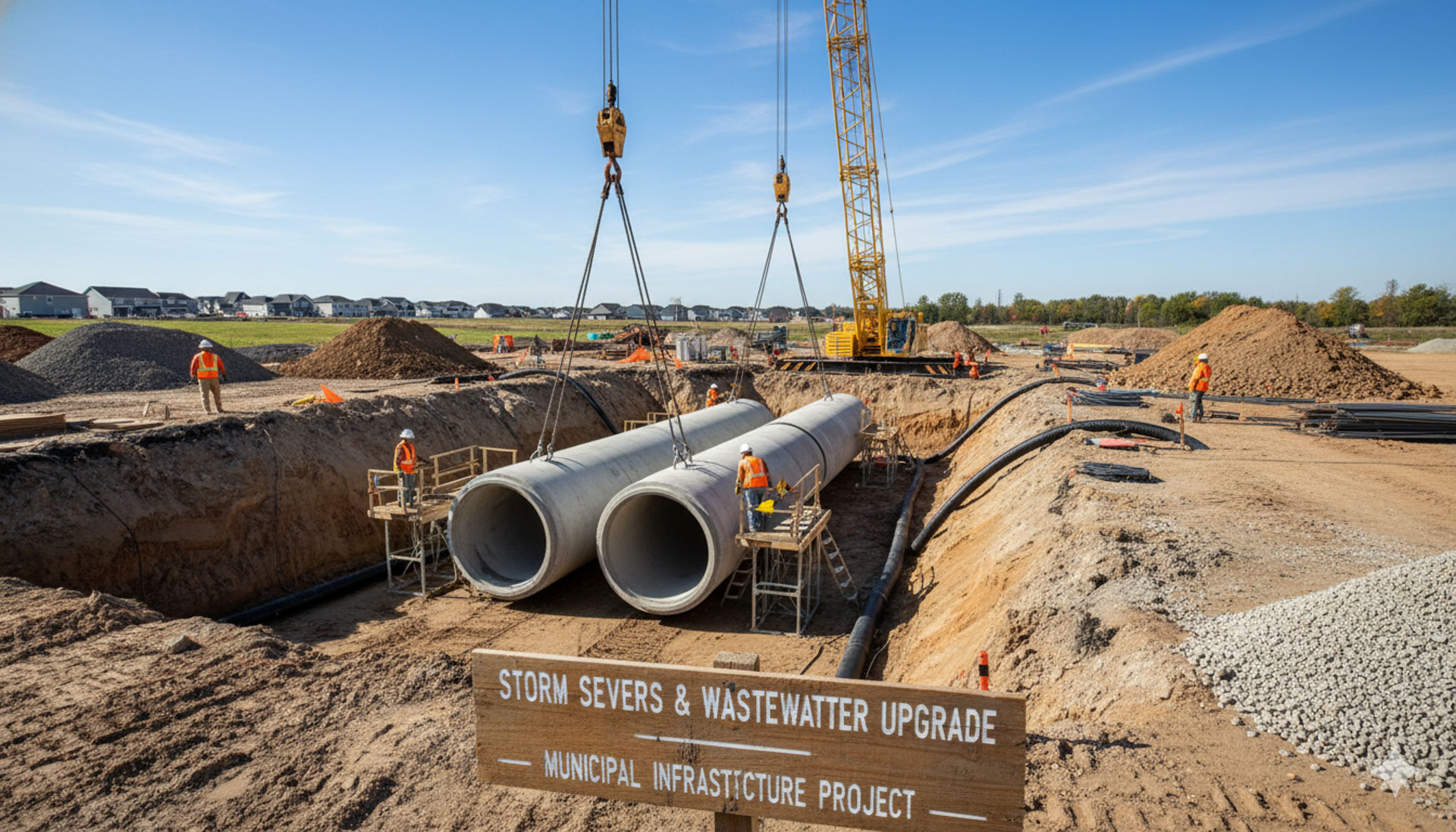
Bellevue City Council approved multiple infrastructure improvement contracts totaling over $2.3 million during their February 3, 2026 meeting, addressing critical stormwater and wastewater system upgrades throughout residential neighborhoods. These investments include the Quail Creek Lift Station replacement, Kennedy Freeway and Capehart Road improvements, and various sewer line rehabilitation projects that protect homes from flooding and sewage backups. For homeowners, these municipal infrastructure investments represent essential protection for property values and basement integrity across Bellevue's growing residential areas.
Municipal wastewater and stormwater systems operate invisibly beneath streets until they fail, causing basement flooding, sewage backups, and expensive property damage. The Environmental Protection Agency's infrastructure research demonstrates that proactive replacement of aging pipes, pump stations, and drainage systems costs significantly less than emergency repairs after system failures. Bellevue's $2.3 million investment prevents problems rather than reacting to crises that damage homes and disrupt neighborhoods.
Homeowners planning basement finishing projects or home additions should understand how municipal infrastructure capacity affects what improvements are feasible. Adding bathrooms, kitchens, or laundry facilities increases wastewater generation that must flow through city sewer lines to treatment facilities. Similarly, expanding your home's footprint creates additional roof area and hardscaping that generates stormwater runoff requiring proper drainage. Working with experienced contractors like Davis Contracting LLC ensures your home improvements comply with municipal capacity limitations and drainage requirements.
Commonwealth Electric Company of the Midwest received a contract for electrical infrastructure work supporting the Kennedy Freeway and Capehart Road improvements. This project addresses underground utility coordination, street lighting upgrades, and traffic signal modifications that accompany roadway reconstruction. The Public Works Department coordinates these improvements to minimize disruption while ensuring all utility systems meet current safety and capacity standards.
Major street reconstruction projects near residential areas create temporary inconvenience but deliver long-term benefits including improved drainage, smoother pavement, better lighting, and enhanced pedestrian safety. Homeowners living near construction zones should anticipate detour routes, construction noise during daytime hours, and occasional utility service interruptions with advance notice. These short-term disruptions pale compared to the property value protection that quality infrastructure provides over decades of reliable service.
Modern sewer rehabilitation often uses trenchless technology that repairs or replaces underground pipes without excavating entire streets. North American Society for Trenchless Technology research describes how cured-in-place pipe lining, pipe bursting, and directional boring minimize surface disruption while extending sewer line service life by 50-75 years. These technologies reduce project costs, shorten construction timelines, and minimize traffic disruption compared to traditional excavation methods.
The same innovation driving municipal infrastructure improvements applies to residential construction. Modern custom home builders use advanced materials, construction techniques, and building systems that outperform traditional methods. Homeowners benefit from choosing contractors who invest in ongoing training, modern equipment, and quality materials rather than sticking with outdated approaches because "that's how we've always done it."
Bellevue's stormwater system collects rainfall from roofs, driveways, streets, and parking lots, directing it through underground pipes to detention basins and eventually to natural waterways. When stormwater systems function properly, heavy rains drain efficiently without flooding streets or backing up into basements. System failures cause water to pond in low-lying areas, overwhelm basement sump pumps, or even back up through floor drains into finished living spaces.
Homeowners with finished basements understand the importance of keeping water outside foundation walls. The same municipal investment in stormwater infrastructure that prevents street flooding also protects individual homes from groundwater saturation that increases hydrostatic pressure against basement walls. If you're considering basement finishing, verify that your property has adequate drainage and that municipal stormwater systems in your area function properly during heavy rainfall events.
Bellevue finances wastewater and stormwater improvements through dedicated revenue funds supported by user fees appearing on quarterly utility bills. Unlike general taxes that fund various municipal services, these enterprise funds operate on a self-sustaining basis where fee revenue directly supports infrastructure maintenance, operation, and capital improvements. The U.S. Census Bureau tracks how municipalities nationwide structure utility funding to maintain essential infrastructure.
Understanding this funding model helps homeowners appreciate the relationship between utility fees and property value protection. When you pay sewer and stormwater charges, you're investing in systems that prevent expensive damage to your home's foundation, basement, and landscaping. This municipal infrastructure investment parallels the homeowner decision to invest in quality construction rather than cutting corners on materials and workmanship. Both approaches recognize that upfront investment prevents expensive failures over the long term.
Municipal infrastructure projects sometimes require temporary water or sewer service interruptions for connection work. Bellevue notifies affected residents in advance, typically scheduling service interruptions during daytime hours when most people can adjust their routines. These brief inconveniences allow crews to safely connect new infrastructure to existing systems while maintaining service to unaffected areas.
Homeowners undertaking major renovations experience similar temporary disruptions when contractors upgrade home systems like electrical panels, water service lines, or HVAC equipment. Professional contractors like those at Davis Contracting minimize inconvenience by clearly communicating schedules, maintaining clean work sites, and completing disruptive work phases efficiently. The key difference between frustrating projects and smooth renovations often comes down to contractor communication quality and respect for homeowners' daily routines.
Bellevue's infrastructure investments reflect comprehensive capital improvement planning that identifies system needs years in advance. This proactive approach prevents crisis management where deferred maintenance eventually forces expensive emergency repairs. The American Water Works Association recommends that municipalities maintain detailed infrastructure asset inventories, assess condition regularly, and fund replacement before systems fail catastrophically.
Homeowners benefit from similar long-term thinking about home maintenance and improvement timing. Rather than deferring roof replacement until leaks damage interior finishes, or delaying foundation repairs until cracks widen, proactive homeowners address problems while solutions remain affordable and manageable. This maintenance philosophy extends to knowing when to upgrade home systems, add space for growing families through thoughtfully planned additions, or refresh outdated spaces to maintain home functionality and value.
The $2.3 million in infrastructure improvements approved by Bellevue City Council represents sound municipal asset management that protects residential property values throughout the community. Homeowners can track ongoing infrastructure projects through the city's website and Public Works Department updates. Understanding how municipal infrastructure supports your home helps you make informed decisions about property maintenance, improvement timing, and long-term investment in your Bellevue residence.