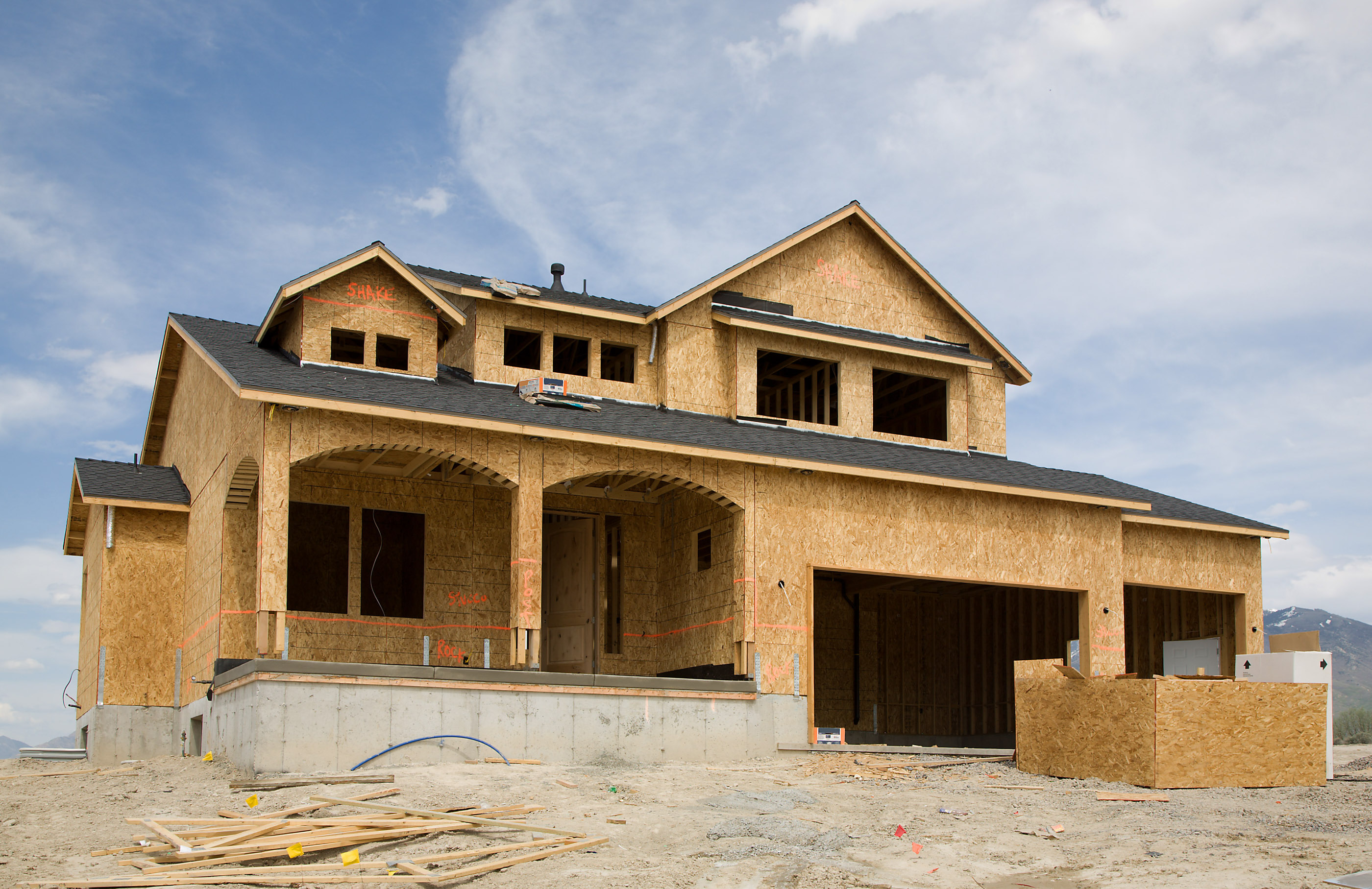
You've found the perfect lot in Elkhorn. You've designed your dream home. You're ready to build. Then you call your mortgage lender and say "I need a construction loan"—and suddenly the conversation gets complicated.
Construction loans aren't like regular mortgages. Banks treat them differently because they're funding something that doesn't exist yet. The underwriting is stricter. The documentation requirements are extensive. And the process involves draw schedules, inspections, and coordination that most homebuyers have never experienced.
After helping families build custom homes across Omaha, Papillion, Elkhorn, and throughout the metro area, we've seen every construction loan scenario—smooth processes and nightmare situations.
This guide explains exactly how construction financing works, what lenders actually look for, how to choose the right loan program, and how to avoid the financing mistakes that delay or derail custom home projects.
Construction Loan Basics: How They're Different from Regular Mortgages
A construction loan is temporary financing that covers the cost of building your home. Here's what makes it fundamentally different:
Traditional Mortgage vs. Construction Loan
Traditional Mortgage:
- Funds a completed home that exists right now
- Single closing and disbursement
- Collateral (the home) has established value
- Lower risk for lender
- Starts as permanent financing
- Fixed monthly payment from day one
Construction Loan:
- Funds a home that doesn't exist yet
- Multiple disbursements over 6-12 months
- Collateral value increases as construction progresses
- Higher risk for lender
- Converts to permanent financing after construction
- Interest-only payments during construction
Why Banks View Construction Loans as Higher Risk
From the bank's perspective, construction loans carry significant risks:
Risk #1: No Collateral Initially
- They're lending money on a hole in the ground
- If you default during construction, they own an incomplete home
- Incomplete homes are difficult to sell
- They may recover only 50-70% of funds advanced
Risk #2: Builder Dependency
- Project success depends on builder's competence
- If builder fails or abandons project, bank has problems
- Quality issues affect final appraised value
Risk #3: Cost Overruns
- Construction costs can exceed estimates
- Borrower may run out of money mid-project
- Bank may need to advance additional funds to protect investment
Risk #4: Appraisal Risk
- Final home must appraise at or above loan amount
- If appraisal comes in low, bank is over-leveraged
- Borrower may not qualify for permanent financing
Because of These Risks:
- Construction loans have stricter qualification requirements
- Interest rates are typically 0.5-1% higher than traditional mortgages
- Down payment requirements are higher (typically 20% vs. 3-10%)
- Documentation requirements are more extensive
Types of Construction Loans: Understanding Your Options
There are three main construction loan structures. Understanding the differences is critical:
Option 1: Construction-to-Permanent Loan (One-Time Close)
This is the most popular option for custom home buyers.
How It Works:
- Single loan application and closing
- Locks in your interest rate at closing
- Construction phase: interest-only payments on funds drawn
- After construction completes: automatically converts to permanent mortgage
- No second closing, no second set of closing costs
Construction Phase (6-12 months):
- Lender advances money in stages ("draws") as work completes
- You pay interest only on the amount advanced so far
- Principal balance grows as more draws are taken
- Example: Month 3, $150,000 has been drawn
- Your payment = $150,000 × (interest rate/12) = ~$750/month at 6% rate
Conversion to Permanent Mortgage:
- Once Certificate of Occupancy is issued
- Final inspection and appraisal completed
- Loan automatically converts to permanent mortgage
- Regular principal + interest payments begin
- Typically 30-year fixed rate
Advantages:
- One closing = lower closing costs (save $3,000-$6,000)
- Interest rate locked from beginning (protects against rising rates)
- Simpler process overall
- Most borrowers prefer this structure
Disadvantages:
- Slightly higher rates than stand-alone construction loans (typically 0.25-0.5%)
- Less flexibility if you want to refinance immediately after construction
- Must qualify for both construction and permanent loan upfront
Best For: Most custom home buyers who want simplicity and rate protection
Option 2: Stand-Alone Construction Loan (Two-Time Close)
This is the traditional construction loan structure.
How It Works:
- First closing: Construction loan only (6-12 months)
- Interest-only payments during construction
- At completion: Second closing for permanent mortgage
- Permanent mortgage pays off construction loan
Construction Phase:
- Higher interest rates than construction-to-permanent (typically 1-2% higher)
- Same draw process
- Interest-only payments
After Construction:
- You apply for permanent mortgage as separate loan
- Second closing with all associated costs
- New appraisal required
- Rate determined by market rates at that time (could be higher or lower)
Advantages:
- Lower rates during construction phase (sometimes)
- More flexibility at conversion (can shop for best permanent rate)
- Can refinance immediately without prepayment penalty
Disadvantages:
- Two closings = double the closing costs ($6,000-$12,000 in closing costs total)
- Interest rate risk (rates could rise during construction)
- Qualification risk (must requalify for permanent loan)
- More administrative hassle
Best For:
- Buyers with significant assets who can pay construction costs if financing falls through
- Buyers who believe rates will drop during construction period
- Buyers planning to sell another property during construction to pay off permanent loan
Option 3: Owner-Builder Construction Loan
This is for people acting as their own general contractor.
How It Works:
- You manage the construction yourself
- Hire and coordinate all subcontractors
- Bank advances funds directly to you
- You pay subcontractors
Requirements:
- Much larger down payment (30-40% typical)
- Higher interest rates
- More extensive documentation
- Detailed construction budget required
- Sometimes requires construction experience documentation
Why It's Difficult:
- Banks view owner-builders as highest risk
- Many banks won't offer these loans at all
- Those that do charge premium rates
Advantages:
- Can save builder's overhead and profit (15-20% of construction cost)
- Total control over all decisions
Disadvantages:
- Requires extensive construction knowledge
- Full-time job managing construction
- Financial risk falls entirely on you
- Very difficult to get financing
- Most people drastically underestimate the complexity
Best For:
- Experienced construction professionals building their own homes
- People with significant construction industry experience
- Not recommended for most people
Reality Check: At Davis Contracting, we occasionally work with owner-builders who hire us as consultants. Most abandon the owner-builder approach after seeing the complexity involved and hire us as their general contractor instead.
Construction Loan Qualification: What Lenders Actually Look For
Construction loans have stricter qualification requirements than traditional mortgages:
Credit Score Requirements
Minimum Credit Scores:
- 680 minimum for most programs
- 700+ for best rates
- 720+ for jumbo loans (>$726,200 in 2026)
Why Credit Matters More:
- Higher risk = higher standards
- Late payments in last 2 years are red flags
- Any construction-related defaults in past = likely denial
How to Prepare:
- Check credit reports 3-6 months before applying
- Dispute any errors
- Pay down credit card balances
- Don't open new credit accounts
- Don't make major purchases before or during loan process
Income and Employment Requirements
Income Documentation:
- 2 years of tax returns
- 2 years of W-2s or 1099s
- Recent pay stubs (last 30 days)
- Verification of employment
- Profit and loss statements (if self-employed)
Employment Stability:
- 2+ years with current employer (or in same field)
- Job changes during loan process = problems
- Self-employed borrowers need 2 years of tax returns showing steady income
Debt-to-Income Ratio:
- Maximum DTI: 43-45% typically
- Includes all debt (car loans, credit cards, student loans)
- Calculation: (Total Monthly Debts) / (Gross Monthly Income)
Example:
- Gross monthly income: $10,000
- Existing debts: $1,500/month (cars, credit cards, student loans)
- New mortgage payment: $2,800/month
- Total debts: $4,300
- DTI: $4,300 / $10,000 = 43% (borderline)
Special Consideration for Construction Loans:
Some lenders count your current housing payment AND estimated new payment during construction phase, creating higher DTI temporarily. Others only count one. Ask your lender how they calculate this.
Down Payment Requirements
Typical Down Payment Requirements:
- 20% minimum for most construction-to-permanent loans
- 25% for two-time close loans
- 30-40% for owner-builder loans
- 10-15% possible for VA loans (qualified veterans)
- Special programs may offer 5-10% down (rare, higher rates)
What Counts as Down Payment:
- Cash in bank accounts
- Proceeds from sale of current home
- Gift funds from family (with proper documentation)
- Owned land (equity in land can count toward down payment)
Example Scenario:
- Total project cost: $600,000
- Land: $120,000 (you already own it)
- Construction: $480,000
- 20% down payment required = $120,000
- Your owned land counts as $120,000 equity
- Additional down payment needed: $0
- You only need cash for closing costs and construction loan interest during build
Land as Down Payment:
If you already own your lot, its appraised value typically counts toward your down payment requirement. This is huge advantage.
Requirements:
- Land must be owned free and clear (no liens)
- Recent appraisal required ($400-$600)
- Land value must be documented
- Some lenders limit how much land equity can count (e.g., maximum 50% of required down payment)
Asset Requirements
Beyond down payment, lenders want to see reserves:
Reserve Requirements:
- 2-6 months of mortgage payments in liquid assets
- More reserves required for:
- Jumbo loans (6 months typical)
- Self-employed borrowers
- Investment properties
- Lower credit scores
Liquid Assets That Count:
- Checking and savings accounts
- Money market accounts
- Stocks, bonds, mutual funds (70-90% of value counts)
- Retirement accounts (60-70% of value counts)
Assets That Don't Count:
- Home equity (not liquid)
- Personal property
- Life insurance cash value (usually)
- Business assets (usually)
Why Reserves Matter:
Banks want assurance that you can make construction loan interest payments even if income is disrupted. They also want cushion for cost overruns.
Builder Requirements
Lenders Evaluate Your Builder Carefully:
- Licensed and insured
- Years in business (typically require 2+ years)
- Financial stability
- References from other lenders
- Quality of previous work
- Completion rate on projects
Red Flags That Kill Loans:
- Builder is new to business
- Builder has liens or judgments
- Builder isn't properly licensed
- Builder won't provide financial documentation
- Other lenders won't work with builder
Why This Matters:
Your loan approval is partially contingent on your builder's qualifications. Choose a builder with strong lender relationships.
At Davis Contracting, we're approved with all major construction lenders in the Omaha area. We provide complete financial documentation and references. Lenders trust us because we have 100% project completion rate and no liens or judgments.
Appraisal Requirements
Two Appraisals Are Required:
Appraisal #1: Subject-to-Completion Appraisal (Before Construction)
- Appraiser reviews plans and specifications
- Determines "subject to completion" value
- Based on comparable home sales
- Must support loan amount
Example:
- You're building 2,400 sqft custom home
- Total cost (land + construction): $600,000
- Appraiser reviews plans
- Comparable sales: $580,000-$620,000
- Appraised value: $610,000
- Loan approved (appraisal supports value)
If Appraisal Comes In Low:
- Loan amount reduced to match appraisal
- You need larger down payment to cover gap
- OR you reduce construction budget to match appraisal
Example of Problem:
- Planned budget: $600,000
- Appraisal: $550,000
- 80% LTV = $440,000 max loan
- You need $160,000 down instead of $120,000
- Choices: (1) Come up with extra $40,000, (2) Reduce construction budget $50,000
Appraisal #2: Final Appraisal (After Construction)
- Appraiser inspects completed home
- Verifies quality matches plans
- Confirms value still supports loan
- Required before conversion to permanent mortgage
Why Final Appraisal Matters:
If construction quality is poor or corners were cut, final appraisal may come in below subject-to-completion appraisal. This creates problems at conversion.
How to Protect Yourself:
- Hire quality builder with track record
- Don't cut corners during construction
- Complete all agreed-upon finishes
- Make sure home is finished before final appraisal
For more details on what quality construction looks like, see our guide on custom home building costs.
The Construction Loan Process: Step-by-Step Timeline
Here's exactly what happens from application to funding:
Step 1: Pre-Qualification (Week 1)
What Happens:
- Initial conversation with lender
- Basic financial information provided
- Credit pulled (soft inquiry that doesn't affect score)
- Preliminary loan amount determined
- Pre-qualification letter issued
Documents Needed:
- Basic income information
- Asset information (ballpark numbers)
- Social security numbers for credit check
Timeline: 1-3 days
Pre-Qualification vs. Pre-Approval:
- Pre-qualification: Initial assessment, not verified
- Pre-approval: Full documentation reviewed and verified (comes later)
Step 2: Lot Purchase and Builder Selection (Weeks 2-8)
What Happens:
- You select and purchase lot (if you don't already own)
- You select builder and finalize design
- Detailed construction budget created
Lender Needs:
- Builder's license and insurance documentation
- Builder's financial statements
- Detailed construction budget
- Architectural plans
- Lot survey and legal description
Timeline: Varies based on lot search and design process
See our guide to choosing the right lot for this phase.
Step 3: Formal Loan Application (Week 9)
What Happens:
- Complete formal loan application
- Submit all required documentation
- Pay application fee ($500-$1,000 typically)
- Appraisal ordered
Documents Required:
- Last 2 years tax returns
- Last 2 months bank statements
- Recent pay stubs
- W-2s or 1099s (2 years)
- Proof of assets
- Builder contract
- Construction budget
- Architectural plans and specifications
- Lot survey
- Purchase agreement for lot (if recent purchase)
- Gift letter (if using gift funds)
Timeline: 1-2 days to complete application, 2-3 weeks for processing
Step 4: Appraisal and Underwriting (Weeks 10-12)
What Happens:
- Appraiser inspects lot and reviews plans
- Subject-to-completion appraisal completed
- Loan file goes to underwriter
- Underwriter reviews all documentation
- Underwriter may request additional documentation
- Underwriter issues approval (with conditions) or denial
Common Underwriting Conditions:
- Explanation of large deposits in bank accounts
- Updated pay stub
- Verification of employment
- Additional asset documentation
- Builder insurance verification
- Permit verification
Timeline: 2-3 weeks typically
Possible Outcomes:
- Clear to Close: All conditions met, ready for closing
- Conditional Approval: Some conditions remain (most common)
- Suspended: Significant issues, need more information
- Denied: Don't meet qualification requirements
Step 5: Conditions and Clear to Close (Week 13)
What Happens:
- You provide requested documentation for all conditions
- Underwriter reviews and clears conditions
- Final loan approval ("clear to close") issued
- Closing scheduled
Timeline: 3-7 days to clear conditions
Step 6: Closing (Week 14)
What Happens:
- Final review of closing documents
- Title company prepares documents
- You review and sign closing documents
- Funds disbursed to title company
- Closing costs paid
Typical Closing Costs (2-5% of Loan Amount):
- Loan origination fee (0.5-1% of loan)
- Appraisal fee ($500-$800)
- Credit report fees ($50-$100)
- Title insurance ($1,000-$2,500)
- Recording fees ($200-$500)
- Survey costs ($800-$1,500)
- Inspection fees ($400-$600)
- Attorney fees (if required, $500-$1,500)
Example:
- $480,000 loan amount
- 3% closing costs = $14,400
- Plus down payment: $120,000
- Total cash needed at closing: $134,400
Timeline: 1-2 hours at closing table
Step 7: Construction Begins (Week 15)
What Happens:
- Builder receives "notice to proceed"
- Builder obtains building permits
- Construction begins
- First draw occurs
Your Loan Is Now Active
How Construction Loan Draws Work
This is the most confusing part of construction loans for most borrowers:
The Draw Schedule
Money is released in stages as construction progresses. Typical draw schedules:
6-Draw Schedule (Most Common for Residential):
- Foundation Complete (15-20% of construction budget)
- Foundation poured and waterproofed
- Basement floor complete
- First floor deck in place
- Framing and Dry-In Complete (20-25%)
- Framing complete
- Roof on and shingled
- Windows and doors installed
- House "dried in"
- Rough Mechanicals Complete (15-20%)
- HVAC rough-in complete
- Plumbing rough-in complete
- Electrical rough-in complete
- Passed rough inspections
- Drywall Complete (15-20%)
- Insulation installed
- Drywall hung, taped, finished
- Primed and ready for paint
- Finishes Substantially Complete (15-20%)
- Painting complete
- Flooring installed
- Cabinets and countertops installed
- Trim work complete
- Fixtures installed
- Final Draw (10-15%)
- Certificate of Occupancy issued
- Final inspection passed
- Punch list substantially complete
- Home ready for occupancy
Holdback Amount:
Most lenders hold back 10% of the construction budget until final completion. This protects them if there are issues.
The Draw Request Process
How Draws Work:
Step 1: Builder Requests Draw
- Builder completes stage of work
- Builder submits draw request to lender
- Draw request includes:
- Description of completed work
- Invoices from subcontractors
- Lien waivers from subcontractors (proving they were paid for previous draws)
- Photos of completed work
Step 2: Lender Inspection
- Lender sends inspector to verify work
- Inspector confirms work described in draw request is complete
- Inspector confirms quality is acceptable
- Inspector provides report to lender
Step 3: Lender Approval
- Lender reviews draw request and inspection report
- Lender approves draw amount
- Funds released (typically within 3-5 days of inspection)
Step 4: Funds Disbursement
- Funds sent to title company
- Title company disburses to builder
- You're notified of disbursement
Timeline: 7-10 days from draw request to funds received by builder
Your Payments During Construction
During construction phase, you make interest-only payments on the amount drawn so far.
Example:
- Total loan: $480,000
- Interest rate: 6%
- Month 1: $0 drawn
- Month 2: $75,000 drawn (foundation)
- Your payment: $75,000 × 6% / 12 = $375
- Month 4: $195,000 drawn (framing complete)
- Your payment: $195,000 × 6% / 12 = $975
- Month 7: $360,000 drawn (substantially complete)
- Your payment: $360,000 × 6% / 12 = $1,800
- Month 9: $480,000 drawn (fully funded)
- Your payment: $480,000 × 6% / 12 = $2,400
Important: These are interest-only payments. No principal is being paid down during construction.
Common Draw Problems
Problem #1: Lender Won't Release Draw
Causes:
- Work not completed as described
- Quality issues identified by inspector
- Missing lien waivers from subcontractors
- Building inspector hasn't approved work
Solution: Builder must correct issues before draw is released.
Problem #2: Draw Amount Disputed
Causes:
- Lender inspector says less work is complete than builder claims
- Disagreement over percentage complete
Solution: Usually resolved through negotiation or third-party inspection.
Problem #3: Draws Delayed
Causes:
- Inspector scheduling delays
- Missing documentation from builder
- Lender processing delays
Impact: Builder may stop work if not paid on time.
Prevention: Work with reputable builder who maintains good lender relationships and submits complete documentation.
At Davis Contracting, we've processed hundreds of draw requests. We know exactly what lenders need and submit complete documentation every time. Our draws typically process in 5-7 days.
Choosing the Right Construction Lender
Not all construction lenders are equal. Here's what to look for:
Local vs. National Lenders
Local Banks and Credit Unions:
Advantages:
- Understand local market and neighborhoods
- Familiar with local builders
- More flexible on some requirements
- Can often make decisions locally (faster)
- Better customer service (talk to same person throughout)
Disadvantages:
- May have higher rates than national lenders
- Smaller loan limits (may not do jumbo loans)
- Fewer loan program options
Best For: Most Omaha-area custom home buyers, especially with projects under $750,000
Local Lenders Active in Omaha Construction:
- Union Bank & Trust
- First National Bank of Omaha
- Pinnacle Bank
- SAC Federal Credit Union
- Centris Federal Credit Union
National Lenders:
Advantages:
- Competitive rates (sometimes lower)
- Large loan amounts (jumbo specialists)
- More loan program options
- Online convenience
Disadvantages:
- Less familiar with local market
- May not work with smaller local builders
- Customer service can be impersonal
- Slower decision making (multiple layers)
Best For: Jumbo loans, borrowers who want lowest possible rate, borrowers with complex financial situations
Questions to Ask Potential Lenders
Question #1: "How many construction loans do you close per year in the Omaha area?"
Red Flag Answer: "We do them occasionally" or vague response
Good Answer: "We close 50-100 construction loans per year in the Omaha metro"
Why It Matters: Experience with local market and builders matters.
Question #2: "Do you work with [your chosen builder]?"
Red Flag Answer: "We've never heard of them"
Good Answer: "Yes, we've closed several loans with them" or "They're approved, let us verify their documentation"
Why It Matters: If lender won't work with your builder, you need a different lender or builder.
Question #3: "What's your average time from application to closing?"
Red Flag Answer: "4-6 weeks" (unrealistic) or "It depends" (vague)
Good Answer: "6-8 weeks typically, assuming complete documentation and no issues"
Why It Matters: Unrealistic timelines indicate inexperience.
Question #4: "What's your typical draw inspection turnaround time?"
Red Flag Answer: "What's a draw inspection?" or "2-3 weeks"
Good Answer: "We inspect within 48 hours of request and release funds within 3-5 days of approval"
Why It Matters: Slow draw processing delays your construction timeline.
Question #5: "What percentage of your construction loans convert successfully to permanent mortgages?"
Red Flag Answer: Vague response or defensive tone
Good Answer: "95-98% convert successfully. The few that don't are usually due to borrower financial changes during construction."
Why It Matters: Low conversion rates suggest problems with their process or borrower qualification.
Question #6: "What happens if the project costs more than budgeted?"
Red Flag Answer: "You need to come up with the difference"
Good Answer: "We have a contingency process. Depending on the reason for overrun and the amount, we may be able to adjust the loan, but it requires additional underwriting and can't exceed appraised value."
Why It Matters: Cost overruns happen. You need to know the process upfront.
Question #7: "What are your reserve requirements?"
Answer Will Vary: 2-6 months depending on loan type and borrower situation
Why It Matters: If you barely qualify with reserves, factor this into your budget.
Interest Rates and Costs: What to Expect
Interest Rate Expectations (2026)
Construction-to-Permanent Loans:
- Typical rate: 6.5-7.5% (as of early 2026)
- Rate locked at closing
- Converts to permanent mortgage at same rate
Stand-Alone Construction Loans:
- Typical rate: 7.0-8.5%
- Variable rate common
- Separate permanent loan rate determined at conversion
Factors Affecting Your Rate:
- Credit score (higher score = lower rate)
- Down payment amount (more down = lower rate)
- Loan amount (jumbo loans = higher rate)
- Lender choice (rates vary 0.5-1.0% between lenders)
Rate Shopping:
- Shop multiple lenders
- Compare APR, not just rate (APR includes fees)
- Get quotes same day (rates change daily)
- Ask about rate lock period (typically 90-180 days for construction loans)
Fees and Closing Costs
Typical Construction Loan Fees:
- Origination fee: 0.5-1.0% of loan amount
- Appraisal: $500-$800
- Inspection fees: $400-$600
- Draw inspection fees: $100-$200 per draw (some lenders)
- Title insurance: $1,000-$2,500
- Recording fees: $200-$500
- Survey: $800-$1,500
- Credit report: $50-$100
Total Closing Costs: 2-5% of loan amount
Example:
- $480,000 loan
- 3% closing costs = $14,400
Some Fees Are Negotiable:
- Origination fee (can sometimes be reduced)
- Some administrative fees
Fees That Aren't Negotiable:
- Appraisal (third party)
- Title insurance (set by state)
- Recording fees (government fees)
Hidden Costs During Construction
Interest Payments During Construction:
Many borrowers forget to budget for this.
Example:
- 9-month construction timeline
- Average balance during construction: $240,000 (roughly half of $480,000 total)
- Interest rate: 6%
- Total interest during construction: $240,000 × 6% × (9/12) = $10,800
Budget for construction loan interest as part of your project costs.
Insurance During Construction:
- Builder's risk insurance: $1,500-$3,000
- Often required by lender
- Usually paid by builder (may be in construction budget)
Temporary Housing:
- If selling current home before new home completes
- Apartment/rental costs during construction
- Storage costs for furniture
- Budget: $1,500-$3,000 per month depending on market
Common Construction Loan Problems and How to Avoid Them
Problem #1: Low Appraisal Kills the Deal
What Happens:
- Plans and budget completed
- Loan application submitted
- Appraisal comes back $50,000 below expected value
- Loan amount reduced
- Down payment requirement increases
- Project no longer affordable
How to Avoid:
- Get preliminary appraisal assessment early (some appraisers will do this for $200-$300)
- Design home appropriate for neighborhood
- Don't over-build for the area
- Use realistic comparable sales when planning
Example of Over-Building:
- Building $750,000 home in neighborhood where most homes are $450,000-$550,000
- No comparable sales to support value
- Appraisal comes in at $650,000
- Deal falls apart
Problem #2: Job Change During Loan Process
What Happens:
- You accept new job during application process
- Lender must re-verify employment
- May delay closing 30-60 days (need to show job stability)
- If income changes significantly, may need to re-qualify
How to Avoid:
- Don't change jobs during loan process
- If job change is unavoidable, notify lender immediately
- Stay in same field/industry (easier to explain)
Problem #3: Large Deposits in Bank Accounts
What Happens:
- Lender reviews bank statements
- Sees large deposits you can't explain
- Suspects unreported income or undisclosed debt
- Loan delayed while you document sources
How to Avoid:
- Don't make unusual deposits during loan process
- If large deposit needed (e.g., gift from family), document it properly upfront
- Keep paper trail for all large deposits
Problem #4: Running Out of Money Mid-Construction
What Happens:
- Construction costs exceed budget
- All loan funds drawn
- Additional work remains
- You can't afford to complete project
How to Avoid:
- Realistic construction budget from the start
- Include 10% contingency in budget
- Work with builder who does thorough pre-construction estimating
- Monitor spending throughout construction
At Davis Contracting:
Our paid pre-construction design process creates detailed budgets with realistic allowances. We identify exactly what every material costs before you commit to the project. Cost overruns are rare because we don't start construction until the budget is locked and fully funded.
Problem #5: Builder Goes Out of Business
What Happens:
- Builder stops showing up
- Subcontractors unpaid
- Project stalled
- You're stuck with incomplete home and no builder
How to Avoid:
- Choose established builder with solid reputation
- Check builder's financial stability
- Get references from recent projects
- Never pay builder ahead of completed work
- Construction loan draw process protects you (funds released as work completes)
Problem #6: Final Appraisal Comes In Low
What Happens:
- Construction complete
- Final appraisal ordered
- Appraiser finds issues with quality or finishes
- Appraisal below expected value
- Loan won't convert to permanent mortgage
How to Avoid:
- Hire quality builder with proven track record
- Complete all finishes as specified in plans
- Don't cut corners during construction
- Ensure work quality matches expectations
- Complete punch list before final appraisal
VA Construction Loans: Special Considerations for Veterans
If you're a qualified veteran, VA construction loans offer significant advantages:
VA Construction Loan Advantages:
- No down payment required (0% down on loan amount)
- No private mortgage insurance (PMI)
- Competitive interest rates
- More flexible qualification requirements
VA Construction Loan Challenges:
- Not all builders are VA-approved
- Additional paperwork requirements
- Builder must meet VA building standards
- Appraisal follows VA guidelines (can be stricter)
At Davis Contracting:
We're approved with VA lenders and have completed several VA construction loans. We understand the additional requirements and documentation needed for VA financing.
For more information on building with VA financing, contact us to discuss the specific requirements.
Timeline Summary: Application to Funding
Here's the complete timeline for construction loan financing:
Week 1: Pre-qualification conversation
Weeks 2-8: Lot selection, builder selection, design
Week 9: Formal application submitted
Weeks 10-12: Appraisal and underwriting
Week 13: Clear conditions, receive "clear to close"
Week 14: Closing, funds available
Week 15+: Construction begins, draw process
Total Pre-Construction Timeline: 14 weeks (3.5 months) typically
Plan for 4 months from initial lender contact to breaking ground. Rushing this process creates problems.
Working with Davis Contracting: How We Help with Financing
At Davis Contracting, we've helped hundreds of families navigate the construction financing process.
How We Help:
Before You Apply for Financing
- Provide realistic construction cost estimates
- Help you understand true total project cost
- Identify which costs are financed vs. out-of-pocket
- Recommend experienced construction lenders
- Provide documentation lenders need about our company
During Loan Application
- Provide detailed construction budget for lender
- Submit architectural plans and specifications
- Respond quickly to lender questions
- Coordinate with appraisers for site visits
- Provide references from other lenders we've worked with
During Construction
- Submit complete draw requests with all required documentation
- Coordinate lender inspections promptly
- Maintain excellent communication with lenders
- Stay on budget (preventing cost overrun problems)
- Complete work on schedule (preventing extended construction loan interest)
Our Lender Relationships
We're approved with all major construction lenders in the Omaha area:
- Union Bank & Trust
- First National Bank of Omaha
- Pinnacle Bank
- SAC Federal Credit Union
- Centris Federal Credit Union
- Multiple national lenders
What This Means for You:
Your loan approval is faster and smoother when working with a builder who has established lender relationships. We understand what lenders need, provide it promptly, and have proven track record of successful project completions.
Ready to Start Your Custom Home Financing?
Building a custom home in the Omaha area requires careful financial planning and the right lending partner.
We serve:
Schedule Your Discovery Call